For
those of us with many friends among the Sherpas, and memories of
expeditions to its fabled peaks, we're pleasantly surprised that Nepal
remains relatively unscathed by the coronavirus crisis, with just 16
reported cases of COVID-19 and no confirmed deaths as of April 14.
While
the country remains on lockdown through at least April 27, Nepal closed
all climbing, including Everest, for the spring 2020 season. China,
through the Tibet Mountaineering Association, closed all their mountains
to foreigners. Chinese nationals will be allowed on Everest and a small
team is planning their expedition starting in a few weeks.

The family of famed Himalayan climber Apa Sherpa.
The
lack of tourism is dealing a devastating blow to Sherpas and the
personal efforts to aid their recovery. The Sherpas have come to depend
on the income from Everest expeditions to support their families, buy
food, pay school costs, build homes, and more.
This year's loss of income will be a considerable hardship for many of them.
Mountaineer Lukas Furtenbach, founder and lead mountain guide of Furtenbach Adventures, writes on Entrepreneur.com
(April 1), "With access to the mountain (Everest) now officially shut
off to adventure-seeking climbers, the short Everest climbing season is
over before it really began, and so with it goes all the tourism-related
commerce that keeps the local economy afloat.
"Every
year, Sherpas sign on with climbing expeditions and trekking groups to
serve as 'the muscle' behind the Herculean effort of getting gear,
supplies and people up to the world's highest altitudes. For almost all
of them, that work is their only source of income for the entire year,
and now that work is gone," according to Furtenbach.
"We had lost our climbing season, but they had lost their sole means of livelihood.
"Most
of the Sherpas are professional mountain guides with no other
profession to fall back on. Right now, some of them are on their way
back to their villages to help their families with farming. Others are
headed to Kathmandu hoping to secure some other form of work. The
situation is devastating. And unlike social safety-net programs
available to us in developed countries, there will be no government
'bailout' for these Sherpas coming from Nepal or China," Furtenbach
writes
Read the story here:

Trash continues to plague Everest.
Meanwhile,
Nepal's government earlier this month rejected calls to use the
downtime on the mountain to clean-up trash. Fluorescent tents, discarded
climbing equipment, empty gas canisters and human excrement litter the
well-trodden route to the 8,848-metre (29,029-feet) high summit.
"It is not possible this season," Danduraj Ghimire, chief of Nepal's tourism department told AFP (April 10).
Mountaineering
organizations say that the coronavirus crisis is a good opportunity to
clean-up what is sometimes called the world's highest garbage dump. "The
government should let a Nepali team just clean the mountain. Apart from
clearing trash, it would give employment to Sherpas who have lost this
season's income," said Santa Bir Lama, head of the Nepal Mountaineering
Association.
Read more at:
In an effort to help, popular coach, keynote speaker and mountaineer Alan Arnette of AlanArnette.com,
which is dedicated to raising awareness for ending Alzheimer's, has
posted a day-by-day Virtual Everest 2020 - Support the Sherpas campaign
that links to 10 fundraising efforts from outfitters including Alpine
Ascents International, Adventure Consultants, Furtenbach Adventures (see
above), and others.
Access the list of fundraising campaigns here:
Follow Virtual Everest here:

They can see clearly now, but for how long?
One bit of bright news:
The
distance between the Indian state of Punjab and the Himalayan MouNtain
Range is just shy of 200 km (124 miles). And now for the first time in
almost 30 years, residents in the north western state can actually see
the world's tallest mountain range, according to Sarakshi Rai writing in
Esquire Middle East (April 12).
One of the
reasons for this decreasing air pollution levels in India is because of
the coronavirus lockdown imposed for the last month.
A
report released by the country's Central Pollution Control Board late
last month said the nationwide curfew implemented on March 22 and the
subsequent lockdown ordered by Prime Minister Narendra Modi two days
later, "resulted in significant improvement in air quality in the
country, as revealed by data analysis and comparison of data for time
before enforcement of restrictions."
Now if it could only stay that way without causing such hardship.
ADVENTURES IN SELF-QUARANTINE
One
would be hard-pressed to find a better definition of oxymoron than
"self-quarantine exploration." Among our thousands of readers, most are
probably experiencing severe withdrawal from travel, exploration and
adventure. We "explored" and cleaned our garage recently. Ok, that's
done. Closets were next, then the junk drawer in search of a bottle of
Purell from that last trip to Nepal.
Long-distance
paddler Susan Marie Conrad, 59, a resident of northwest Washington
State, had to delay her planned 1,200-mi. through-paddle of the Inside
Passage. It was cancelled after a year of planning, saving, and training, despite what her friends thought was an ultimate form of
social distancing.
"I know there's no way in hell I'm
going paddle away from this reality and think I'll be sitting on some
beautiful beach, enjoying the sights and sounds of the Inside Passage,
no matter how magical, while this pandemic continues to unfold," she
wrote to her followers.
"The Inside Passage will
always be there. I'm grateful that I have the health, time, and
financial resources to plan and pull off something like this in the
first place. It's a privilege, not a necessity. In the end, it's not
about what I want, it's about what's best for the greater good."
EN
feels the exploration world's pain as we all work together to surmount
what is likely the largest crisis in many of our lifetimes. Not a group
to sit idly by, the exploration world is pivoting with a range of
opportunities to keep homebound spirits alive. So put down the puzzles,
and consider how you can scratch that itch to explore even while social
distancing. Pivots that we admire most include:

Ground Control to Major Tom
* Take a Masterclass with Astronaut Chris Hadfield
MasterClass (www.masterclass.com)
is an immersive online education platform that offers access to genius
by allowing anyone to take online classes with the world's best.
Instructors include Christina Aguilera, Serena Williams, James
Patterson, and Chris Hadfield, EN's instructor this past month.
Referred
to as "the most famous astronaut since Neil Armstrong," Colonel Chris
Hadfield is a worldwide sensation whose video of David Bowie's Space Oddity, produced in the International Space Station while weightless, was seen by over 45 million people online.
He
is acclaimed for making outer space accessible to millions, and for
infusing a sense of wonder into our collective consciousness not felt
since humanity first walked on the Moon. A heavily decorated astronaut,
engineer, and pilot, Colonel Hadfield helped build the Mir space station, performed two spacewalks, and in 2013, became Commander of the ISS for six months off planet.

Hadfield uses a model of the ISS during his MasterClass.
Want
to learn about the In-Situ Resource Utilization for Mars exploration?
Watch the ISS traveling through the aurora australis? Learn about
quindar tones (see Buzz Words)? Bubble detectors? Ion propulsion
engines? Escape velocity and Hohmann transfer orbits? Chris is your man.
In regards to exploring space in the future, he says
in the online series, "We need to invent stuff we don't even know we
have to invent .... It takes a huge group of people working together
right on the edge of possibility."
Watch Hadfield perform Space Oddity:
* Learn from an Antarctic Pro How to Shelter in Place
As
the station chief for the Global Monitoring Division's (GMD)
Atmospheric Research Observatory at the South Pole, Christine Schultz
spent 13 months during 2010 into 2011 in one of Earth's most isolated
places: Antarctica. Three of those months were spent without the sun
hanging in the sky and with temperatures dropping to an average of minus
70 degrees F.
During her time in Antarctica when she
wasn't working, Schultz and the rest of the crew found ways to stay
entertained in their own shelter-in-place scenario.
"People get pretty creative over the winter months when there's not a lot of outside stimulus," Schultz tells Adriana Navarro, AccuWeather
staff writer. Over her time spent sheltering from the minus 70 degrees
F. temperatures, Schultz and the group watched movies, learning how to
knit and hit the gym.
"My greatest advice for anyone
in isolation is to get creative and make sure you have a routine,"
Schultz said. Especially in the winter months, a routine helped her
maintain her sense of day and night. She also suggests not staying in
pajamas all day.
Read the April 3 story here:
* New York Wild Film Festival Goes Online
Turn off Tiger King
and focus on films with more redeeming value. The popular New York Wild
Film Festival invites you to traverse the seven peaks of Fitz Roy in
Patagonia; ride 3,000 miles from Mexico to Canada on horseback; row
across the Atlantic with four working mums from Yorkshire; kayak and
kite ski over the Greenland Ice Cap; sail on a makeshift raft and trek
across hundreds of kilometers of remote outback and so much more.
See the free line-up of films here:
Staying
positive and continuing to plan for the future during this public
health crisis means exploration can come roaring back when life returns
to some semblance of normalcy.

The megalodon is ready for prime time.
* Explore the Oceans From Home
Ocean
First Institute, located in landlocked Boulder, Colorado, connects
youth with the wonders of the ocean and the importance of hands-on
conservation through programming that highlights scientific exploration.
Its in-person and virtual education programs have already inspired over
110,000 students across the world to take action within their local
communities.
Upcoming webinars in April include:
Mysteries of Megalodon, Can sharks really smell a drop of blood a mile
away?, and What can I learn by being a SCUBA diver?
Learn more:
EXPEDITION UPDATE
Self-Quarantining Arctic Explorers Have Great Timing
It's
tempting. Many of us may prefer to be somewhere else on the planet
instead of locked down at home. Somewhere else, like Svalbard, Norway,
for instance, home of two intrepid explorers of the Hearts on Ice
project. In a classic case of great timing, the two planned to be in
self-imposed isolation well before the coronavirus crisis plagued the
world.

Hilde Fålun Strøm (left) is from Svalbard; Sunniva Sorby resides in British Columbia.
In
September 2019, seasoned expedition leaders Hilde Fålun Strøm and
Sunniva Sorby began an nine-month study in isolation in an historic 215
s.f. trapper's cabin known as Bamsebu in Svalbard (See EN, November 2018).
The
goal of the project is to show rapid climate change escalation and what
can be done to mitigate the effects. Now it's turned into so much more.
Due to the virus crisis, they may extend their stay. Current
international travel restrictions make it difficult for Sorby to return
to Canada.
In a recent letter to sponsors, Strom and
Sorby write, "Who would have thought when we planned this expedition and
platform in support of engagement and education around our Climate
Crisis that we would be sitting in the middle of a very different sort
of crisis. Our hearts are with all of you.

Bamsebu, A COVID-free zone.
"We
have more opportunities for wildlife observation (we have had over 33
Polar bear encounters so far - largest bear was 600kg!), ice core
sampling (longest ice core to date is 46 cm), phytoplankton and salt
water collection (eight samples - will collect more when the ice thaws),
drone flights (17 successful infrared pre-programmed flights) to
measure surface temperatures, hosted school calls with experts (18
hosted calls with thousands of youth around the world on topics that
range from Technology to Weather to Citizen Science).
For more information:
Watch their pre-expedition video here:
For advice on surviving self-isolation, see:
QUOTE OF THE MONTH
"Life isn't about waiting for the storm to pass, it's learning to dance in the rain."
-
Vivian Greene (1904-2003), British writer regarded as the world's
foremost expert on dolls' houses. The saying, apropos for these troubled
times, can be seen in inspirational posters and greeting cards
worldwide.
EXPEDITION INK
EN's Favorite Adventure Books
You
can only stare at Netflix and Twitter for so long. Now perhaps more
than ever before, this is the time to get wrapped up in a good adventure
book. Before you set out on your own adventure or expedition, become a
student of those who have gone before. Here are some of our favorite
books on the subject, as reprinted from Get Sponsored: A Funding Guide for Explorers, Adventurers and Would Be World Travelers (Skyhorse Publishing). How many have you read?
Adventures of Huckleberry Finn - Mark Twain (1884). The classic
American novel that inspired countless budding adventurers. "Huck's always
been my hero," polar explorer Will Steger says. "I've patterned my
life after his."

Annapurna - Maurice Herzog (The Lyons Press, paperback edition,
1997). French climber Maurice Herzog's gripping and horrific account of
the first ascent of an 8,000-meter peak in 1950.

Arctic Dreams - Barry Lopez (Charles Scribner's Sons, 1986). An inspiring,
classic celebration of the Arctic region.
The Brotherhood of the Rope: The Biography of Charles Houston -
Bernadette McDonald (The Mountaineers Books, 2007). The story of the
1953 K2 expedition and the famed belay that saved five people.
Crossing Antarctica - Will Steger and Jon Bowermaster (Alfred A.
Knopf, 1991). First-person account of the $11 million expedition that
will be remembered as both Antarctica's final dogsled adventure and the
longest of any kind ever.
Endurance: Shackleton's Incredible Voyage - Alfred Lansing (The Adventure
Library, 1994 Edition). One of the greatest rescue stories ever told.
Eric Shipton: Everest & Beyond - Peter Steele (The Mountaineers
Books, 1998). An in-depth look at this climbing and exploration legend
who explored at a time when there were still white spaces on the map.
Into Thin Air - Jon Krakauer (Villard Books, 1997) - Hard to believe,
but climbing Everest became even more popular after the 1996 tragedy
was recounted in such vivid detail.
Kon Tiki - Thor Heyerdahl (Rand McNally & Company, 1950).
"Fishing was easy; sometimes the bonitos swam aboard with the waves."
Feel the romance of one of the world's best-known expeditions by reading
an original edition purchased from a used book store.
The Last Climb: The Legendary Everest Expeditions of George Mallory -
David Breashears and Audrey Salkeld (National Geographic, 1999). Did
Mallory and Irvine reach the summit? Where's Irvine's camera? Better
read this if you have any hopes of finding it on your own expedition.
The Last Step: The American Ascent of K2 - Rick Ridgeway (The Mountaineers
Books, 1980). What can go wrong on an expedition? Plenty. This
is a first-person account of a K2 climb, warts and all.
North to the Pole - Will Steger with Paul Schurke (Times Books,
1987). Could Robert E. Peary have reached the North Pole in 1909 unsupported?
Will and Paul demonstrate in fifty-five days and a thousand zigzag miles how it could have been done.
Sea of Glory - Nathaniel Philbrick (Viking, 2003). Lewis and Clark
received all the publicity 30 years before, but the U.S. Exploring Expedition
of 1838 to 1842 was the granddaddy of American seagoing expeditions.
Shackleton - Roland Huntford (Ballantine, 1987). The definitive
Shackleton, every excruciating moment of his extraordinary life.
Snowstruck: In the Grip of Avalanches - Jill Fredston (Harcourt, 2005).
Fredston is one of North America's leading avalanche experts. Dreaming of
a white Christmas? Read this and you'll think of snow in a whole new light.
Surviving the Extremes: A Doctor's Journey to the Limits of Human Endurance -
Kenneth
Kamler, MD (St. Martin's Press, 2004). The expedition doctor has seen
it all. You will reconsider swimming in an Amazon lakes after reading
about the candiru.

The Seven Summits - Dick Bass and Frank Wells with Rick Ridgeway (Warner Books, Inc., 1986). Two middle-aged men with a dream to be first to climb the highest mountain on each of the seven continents. The Seven Summits craze started here. When he liked something, such as Snowbird's legendary deep powder, Bass would tell us, "It makes my heart sing, my thing zing, and my socks roll up and down."
They Lived to Tell the Tale: True Stories of Modern Adventure from the
Legendary Explorers Club - Jan Jarboe Russell, editor (The Lyons Press,
2008). Oceanographers, naturalists, Arctic explorers, NASA astronauts,
and even an ethnobotanist all recount their most memorable projects.
Touch the Top of the World - Erik Weihenmayer (Penguin Putnam,
2001). The story of the first blind climber to summit Mount Everest. His
guide dog was a chick magnet, but can he really tell the denomination of
paper bills by smell alone?
List excerpted from Get Sponsored: A Funding Guide for Explorers, Adventurers and Would Be World Travelers (Skyhorse Publishing, 2014)
MEDIA MATTERS

The Explorers Club Goes Hollywood
There was something quite familiar about the climatic scene of Hunters,
the Amazon Prime original content about a diverse band of Nazi hunters
in New York City in 1977. There in episode 10 was the Explorers Club HQ
Roosevelt Room standing in for a doctor's office, and the club's library
as the location for the episode's explosive finale starring Al Pacino
and Logan Lerman.
The scenes were shot last Labor Day
Weekend according to club executive director Will Roseman who says use
of the club for location shoots is a significant fundraiser for the
116-year old organization.

The Explorers Club library was repurposed for the climactic finale of Amazon Studios Hunters. (Photo courtesy of Kevin Murphy).
Roseman
says the club receives standard location rates of $2,000/hour for
shooting time, and $1,000/hour for prep, based on a minimum 12-hour day.
"The revenue generated through these location fees goes to student
grants, building improvement and general administrative costs," Roseman
says.
"We've had many celebrities at the club over
the years. It's fun to see them, but after a quick hello we usually just
go back to work."
Produced by Jordan Peele's
Monkeypaw Productions, Hunters blends history and fantasy for a unique
TV thriller. Creator David Weil said he came up with the concept five
years ago and was largely inspired by stories his grandmother told him
as a boy.
Other productions shot at the club include The Verdict (1982) with Paul Newman; and TVs Vinyl with Bobby Cannavale; and Tiny Fey's Unbreakable Kimmy Schmidt.
EXPEDITION FUNDING

A fuel-efficient cookstove can profoundly change lives in Nepal. (Photo courtesy himalayanstoveproject.org)
Now You're Cooking
Himalayan Stove Project (HSP) released its newest fundraising video, What is Himalayan Stove Project?, depicting its project to deliver fuel-efficient cookstoves to Nepal. The voice of Mandy Stapleford of Good News Good Planet
narrates the 2 min. 20 sec. video, filled with images of Nepal from a
recent delivery mission. It focuses on how the stove can change the
lives of families by reducing household air pollution.
Watch the new video here:
The
sustainable cookstoves lower levels of damaging indoor air pollution by
reducing smoke and harmful gasses by up to 90%, also reducing the
amount of particulate matter contributing to climate change.
Additionally, the stoves greatly reduce the amount of fuel use by up to
75% resulting in less time needed to gather biomass fuel, a daunting and
often dangerous task for women and children.
Since
2012, HSP has worked with Nepali partners to deliver nearly 6,000
cookstoves. HSP sponsor Kahtoola helped sponsor the video.
For more information: Pam Miller, pam@himalayanstoveproject.org, www.himalayanstoveproject.org
EXPEDITION MARKETING


The NASA worm and meatball logos
NASA Brings Back the Worm
The
original NASA insignia is one of the most powerful symbols in the
world. A bold, patriotic red chevron wing piercing a blue sphere,
representing a planet, with white stars, and an orbiting spacecraft.
Today, we know it as "the meatball." However, with 1970's technology, it
was a difficult icon to reproduce, print, and many people considered it
a complicated metaphor in what was considered, then, a modern aerospace
era.
Enter a cleaner, sleeker design born of the
Federal Design Improvement Program and officially introduced in 1975. It
featured a simple, red unique type style of the word NASA. The world
knew it as "the worm."
Now the worm is back. And just in time to mark the return of human spaceflight on American rockets from American soil.
The
retro, modern design of the agency's logo will help capture the
excitement of a new, modern era of human spaceflight on the side of the
Falcon 9 launch vehicle that will ferry astronauts to the International
Space Station as part of the Demo-2 flight, now scheduled for mid- to
late May.
It seems the worm logo wasn't really
retired. It was just resting up for the next chapter of space
exploration. The meatball will remain NASA's primary symbol.
Read the announcement:
For past stories about NASA's symbols, visit:
BUZZ WORDS
Quindar Tones
Most
often referred to as the "beeps" that were heard during the American
Apollo space missions, Quindar tones were a means by which remote
transmitters on Earth were turned on and off so that the Capsule
communicator could communicate with the crews of spacecrafts. (Source:
Astronaut Chris Hadfield on Masterclass; see related story)
EXPEDITION CLASSIFIEDS
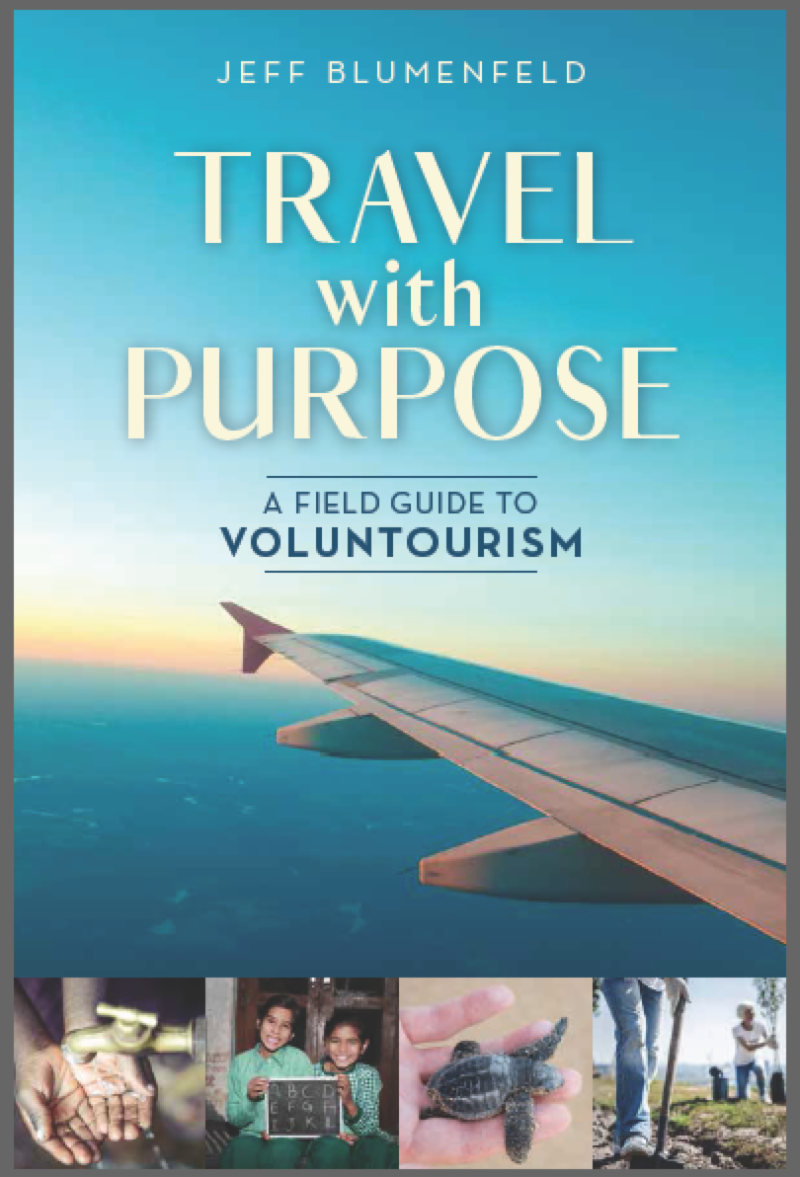
Travel With Purpose, A Field Guide to Voluntourism
(Rowman & Littlefield, April 2019) by Jeff Blumenfeld
- How to travel and make a difference while you see the world? These
are stories of inspiration from everyday voluntourists, all of whom have
advice about the best way to approach that first volunteer vacation,
from Las Vegas to Nepal, lending a hand in nonprofits ranging from
health care facilities, animal shelters and orphanages to impoverished
schools. Case studies are ripped from the pages of Expedition News, including the volunteer work of Dooley Intermed, Himalayan Stove Project, and even a volunteer dinosaur dig in New Jersey.
Read excerpts and "Look Inside" at: tinyurl.com/voluntourismbook @purpose_book

Get Sponsored! - Hundreds of
explorers and adventurers raise money each month to travel on world
class expeditions to Mt. Everest, Nepal, Antarctica and elsewhere. Now
the techniques they use to pay for their journeys are available to
anyone who has a dream adventure project in mind, according to the book
from Skyhorse Publishing called: Get Sponsored: A Funding Guide for Explorers, Adventurers and Would Be World Travelers.
Author Jeff Blumenfeld, an adventure marketing specialist who
has represented 3M, Coleman, Du Pont, Lands' End and Orvis, among
others, shares techniques for securing sponsors for expeditions and
adventures.
Buy it here:
Advertise in Expedition News - For more information: blumassoc@aol.com
EXPEDITION NEWS is published by Blumenfeld and Associates, LLC, 290 Laramie Blvd., Boulder, CO 80304 USA. Tel. 203 326 1200, editor@expeditionnews.com.
Editor/publisher: Jeff Blumenfeld. Research editor: Lee Kovel. ©2020
Blumenfeld and Associates, Inc. All rights reserved. ISSN: 1526-8977.
Subscriptions: US$36/yr. available by e-mail only. Credit card payments
accepted through www.paypal.com.
Read EXPEDITION NEWS at www.expeditionnews.com. Enjoy the EN blog at www.expeditionnews.blogspot.com.