
EXPEDITION NOTES
Lower Cost ROV Makes Deep Sea Exploration More Affordable
At a time when AUVs (autonomous underwater vehicles that look like fat yellow torpedos) cost upwards of $5 million, along comes a New Zealand company with a new idea. Boxfish Research, based in Auckland, has created a lower cost US $70,000 ROV (remotely operated vehicle) that has already been at work for five weeks capturing sea life such as the comb jelly, crocodile ice fish and giant sea spiders near Scott Base in Antarctica. ROVs are connected to a surface ship or land by a cable.

Ben King is roving the seabed with his new ROV.
"We can achieve greater maneuverability and picture quality that wasn't previously available in an ROV," Boxfish co-owner Ben King tells EN. "It rivals the performance of an ROV ten times the size and can operate at depths of 300 meters. What's more, unlike a human diver, it can stay below for hours at a time. Our crew on the surface gets cold before the Boxfish does."
The computer does all the stabilization, much like a drone, so the operator doesn't need much skill to operate it, according to King. Additionally, it allows researchers or filmmakers to pitch or roll the entire vehicle to fit through cracks, look up or down at things, and maneuver around various objects. The Boxfish ultra high definition 4K cameras can stream uncompressed images to the surface.
King continues, "It's a workhorse that gets the job done without a lot of infrastructure."
Next up for the Swiss Army Knife of ROVs is a study of volcanology in the Pacific.
Learn more at: www.boxfish.nz
Watch TV coverage of the Boxfish in action here:
View stunning Antarctic footage captured by the Boxfish ROV:
Details on the volcanology expedition can be seen here:
QUOTE OF THE MONTH
"I think even in bad times it's good to keep some money going into research. And that's the purpose of the whole space program. It's not just exploration and going to see how far we can go out into space and keep people alive and bring them back, although exploration certainly has its place."
- John Glenn (1921-2016), first American to orbit the earth, circling three times in 1962.
EXPEDITION FOCUS
Historic Explorers Club Annual Dinner Was Largest Ever;
Buzz Aldrin's Socks Dazzle
An historic gathering of eight Apollo astronauts, crunchy crickets and scorpions, fossilized dinosaur poop, and Buzz Aldrin's dazzling socks were just a few of the star attractions at The Explorers Club's 115th annual dinner (ECAD), March 16, at the New York Marriott Marquis. It was a marathon of reminiscing astronauts, post-dinner parties, and explorer presentations back at Club headquarters on the Upper East Side. An estimated 1,700 attended the dinner, up over 10 percent from the previous record dinner 15 years ago, raising over $600,000, also a Club record.
As always, EN was on the look-out for the quirky sidebar stories that make this such a special fundraiser for the organization of 3,451 members located in 30 chapters worldwide.

(L-R) Charlie Duke (Apollo 16), Harrison Schmitt (Apollo 17), Fred Haise (Apollo 13), Michael Collins (Apollo 11), Al Worden (Apollo 15), Walter Cunningham (Apollo 7), Buzz Aldrin (Apollo 11), and Rusty Schweickart (Apollo 9). Photo courtesy: Craig Chesek/The Explorers Club
* Eight Apollo Astronauts Were in the House - NASA's Apollo program ran 17 missions, which are best known for putting the first people on the Moon in 1969.
Humanity hasn't set foot on the Moon since NASA's Apollo 17 mission in December 1972. Eight of the 17 surviving Apollo astronauts gathered together at ECAD for an early celebration of the 50th anniversary of the first moon landing, July 20, 1969. Aldrin dazzled; clad in a suit patterned with rocket ships, American flag socks, four gold rings, and two watches, the 89-year-old astronaut certainly stood out.
Aldrin and Collins described how the lunar module almost didn't make it back off the Moon's surface. (Collins stayed in the command module in lunar orbit in order to reconnect with the other two astronauts on their return.)
According to Space.com, Apollo 11's lunar module, Eagle, which ferried the astronauts to the Moon's surface and back, had a broken part.
Aldrin revealed, "I laid down on the floor with my head to the right, which is the co-pilot's side, and I'm looking around at the dust that came in, and there's this little black object. Didn't look like it belonged there. Looked a little closer ... this was a circuit breaker that was broken."
That circuit breaker was a critical piece of machinery that would help the lunar module get back to Collins in orbit.
Luckily, the astronauts were able to jerry-rig a solution to the problem. Aldrin used a pen to push the button in, and the two were able to leave the Moon.
Recently, the U.S. has renewed a push to return men to the Moon. On March 26, Vice President Mike Pence announced plans to send astronauts back to the lunar surface by 2024, according to the Associated Press.
NASA Administrator Jim Bridenstine has also said that placing boots on the Moon is ultimately a step toward the goal of getting astronauts to Mars by the year 2033.
Read more here:
* Boldface Names - For only the second time in about a decade, the dinner received star treatment in the New York Times Style section. Among dinner attendees receiving the boldface name treatment were Aldrin, VP Flags & Honors Bob Atwater, Explorers Medal recipient Dr. Kenneth Lacovara, Kellie Gerardi in a spacesuit, and astronaut Kathryn Sullivan, the first American woman to walk in space.
See the Times coverage here:
The Next Generation Explorers Network, or NGEN, created in 2017 for younger Club members, also gets a shout-out in the Times. The subgroup has about 200 members, according to this Mar. 22 story by Alyson Krueger:

Private astronaut Richard Garriott was rocking a matching Soyuz rocket and tie.
* Of Mice and Men - Duke, Worden, Cunningham, Schweickart, Aldrin and Collins gathered before a crowd of 800 guests earlier in the day to discuss some of the most hair-raising moments of the Apollo program during a panel moderated by private astronaut Richard Garriott.
Collins, the apparent comedian of Apollo 11, shared the expected but unnerving reality of having to stay in quarantine after coming back from space, reports Space.com.
"What I was worried about was the white mice, 'cause when we came back from the moon, we were gonna be in quarantine for a couple weeks with a whole colony of white mice. And if one of those poor little things didn't do too well, we were in deep trouble - we might have brought back some pathogen," he said. "This is just one of the many dangers of spaceflight that aren't as obvious as 'what if the rocket blows up.'"
Read the story here:
For an infographic on how the Apollo 11 landing worked, see:
* Remembering Magellan - As the 500th anniversary of Ferdinand Magellan's worldwide circumnavigation nears, efforts are underway to pay homage to the Spanish monarchy and its relevant role in the history of exploration. UNESCO Goodwill ambassador Kitín Muñoz, promoter of the initiative, and other Spanish officials presented The Explorers Club with a silver replica of the Nao Victoria, the famous ship that had completed the first circumnavigation. During the dinner, comparisons were made between the first step on the Moon and the first circumnavigation of the globe as two major events in the history of exploration.
Between the 15th and the 18th centuries, and especially during the Great Discoveries period, the Spanish crown organized numerous expeditions led by Spanish explorers or sponsored by the crown. Magellan was a Portuguese explorer who organized the Spanish expedition to the East Indies from 1519 to 1522, resulting in the first circumnavigation of the Earth, completed by Juan Sebastián Elcano. Magellan was killed in 1521 on the island of Mactan in the Philippines.
* Comfort Is Overrated - During a dinner for Club chapter chairs, Explorers Medalist Kenneth Lacovara, Ph.D., who is establishing a $57 million museum in southern New Jersey at the Jean & Ric Edelman Fossil Park at Rowan University, said, "Comfort is way overrated. Sitting on the couch playing video games is comfortable, but you're not going to remember that as much as when you were uncomfortable."
Later, Lacovara would tell the dinner, "the brave astronauts of the U.S. space program opened my eyes to exploration and the thrill of the natural world ... I realized I could time travel back to the ancient world by listening to the rocks."
Not to be dismissive, Alan Stern, principle investigator of the New Horizons mission to Pluto, jokes in an aside to EN, "Dinosaurs and space are the gateway drugs to a STEM career, but space always wins."

* Here's the Poop - One of the more unusual items at the silent auction was a piece of coprolite, the scientific term for fossilized feces. They are considered trace fossils, meaning not of the animal's actual body. No matter, it was being offered with a copy of George Frandsen's Coprolites: 100 Portraits of Prehistoric Poops (self published, 2019), wherein individual coprolites are named after the author's friends, such as "John" and "Ashley" and "Mary" and "Fred." Last we looked on Amazon it was America's 1.088 millionth most popular book, so there's no risk of it selling out anytime soon.
Not to get all scatalogical on you, in a related story of a decidedly less fossilized nature, USA Today (Mar. 31) reports that 66 tons of frozen feces left by climbers on Denali is expected to start melting out of the glacier sometime in the coming decades and potentially as soon as this summer, a process that's speeding up in part due to global warming.
Climbers generate close to two metric tons of human waste each year, according to the National Park Service. (The average human "deposit" weighs half a pound and the average length of a climber's stay on the mountain is 18 days, which is how researchers got the figure of 66 tons over the course of the past century.)
Read the story here:
Looking beyond his fellow Apollo astronauts on the ECAD stage, Rusty Schweickart summed up the memorable weekend best, "Every one of us has a pair of eyes that saw the planet from space. We went to the moon and discovered earth."
Tune in this summer for a one-hour television special on The Discovery Channel that will feature ECAD 2019 in a salute to the Apollo program.
EXPEDITION FUNDING
AWE, Nite Ize and LOWA Sponsor $5,000 Scholarship to Nepal
Sunny Stroeer, founder of Aurora Women's Expeditions (AWE) and holder of various high altitude speed records, is launching a $5,000 scholarship that will defray costs for one hand-picked woman to join a trip to Everest Base Camp and Island Peak in fall 2019.
Scholarship applications will be accepted through the end of April.

Sunny Stroeer has a scholarship for one lucky woman.
The Summit Scholarship, sponsored by AWE and Nite Ize, with the support of LOWA Boots, will cover one selected woman's complete expedition fee ($3,190) and a $500
stipend for use towards international flights to/from Kathmandu. The scholarship also includes expedition-relevant gear from Nite Ize, and top quality mountaineering footwear from LOWA Boots valued at more than $1,300. The expedition will take place from October 5 to October 26, 2019.
Qualified applicants must be female, available to travel to Nepal in October 2019, and enthusiastic about challenging themselves physically and mentally in a harsh outdoor environment. Excellent cardio fitness is a must, prior mountaineering experience is not mandatory. The scholarship recipient will be announced by May 15, 2019.
For more information: www.awexpeditions.org/summitscholarship,
Sunny Stroeer, sstroeer@gmail.com
WEB WATCH

Expedition guide Françoise Gervais. Originally from Quebec, Françoise is a deep-sea explorer, environmental conservation specialist, polar expedition leader, and cold-water diver. (Photo by Acacia Johnson)
Time Magazine Examines Antarctica's Ice Ceiling
In 1914, when British explorer Ernest Shackleton was recruiting for an expedition to Antarctica, he got letters from "three sporty girls" applying to join. "There are no vacancies for the opposite sex on this expedition," he responded.
For years, Antarctica was a hostile place for women, and they faced significant political and social obstacles if they wanted to go, according to a Time magazine photo essay posted March 8.
In the 1960s, geologist Janet Thomson recalled the reply one female colleague received to her expedition application, which stated that there were "no facilities for women" in Antarctica, including no shops and no hairdresser. Women were even banned from the U.S. Antarctic Research Program until 1969.
Since then, the polar gender dynamic has continued to shift, with more and more women taking roles as base commanders, expedition leaders, heavy equipment operators, scientists and researchers.
After crossing the Drake channel only twice, which was enough for our sensitive inner ear canal, we can greatly appreciate this comment in the piece: "For guides who work long seasons in Antarctica, the turmoil of the Drake is a regular occurrence - a staff member may cross these waters up to 20 times in the course of a single Antarctic summer."
Photographer Acacia Johnson tells Time, "Through images, I want to show the Antarctica that I know - a seasonal home to a growing community of inspiring women, drawn together by this captivating place. I wanted to create portraits that challenge conventional ideas about who works in Antarctica, and how, and why."
See the photo essay here:
EXPEDITION INK
Stay Safe While Exploring
By Jeff Blumenfeld
Excerpted from Travel With Purpose: A Field Guide to Voluntourism (Rowman & Littlefield, 2019) by Jeff Blumenfeld, editor of Expedition News, travelwithpurposebook.com
By its very definition, voluntourism and exploration often take you to places far off the grid, far from reliable medical services, and far from the safe sanitation and food handling practices you've come to expect in the U.S.
Don't I know it. During my last trip to Nepal I was a good boy: drank only bottled water, used Purell hand sanitizer by the gallon, and ate only food that was hot, hot, hot - cooked completely through and through. But I let my guard down.

A lifesaver: don't leave home without it.
During literally the last hour in Nepal, at the Kathmandu Tribhuvan International Airport, I convinced myself that the fruit plate in the VIP Executive Lounge could be trusted. Big mistake. In about 20 hours, during the final flight from New York to Denver, digestive distress kicked in, alleviated only once I arrived home and downed some DiaResQ, a natural diarrhea relief aid made with bovine (cow) colostrum. Sounds awful, but it worked. Eating that last snack in Nepal was a rookie move on my part as I realize during my eighth trip to the tiny airplane lavatory. Too much information? Ok, let's move on.
There are certain measures I employ that have worked well for me and might also be appropriate for you.
* Depending on the destination, 22 to 64% of travelers report some illness - generally they're mild and self-limited, such as diarrhea, respiratory infections, and skin disorders. But some travelers return to their own countries with preventable life-threatening infections, according to the New England Journal of Medicine. Consult with a medical professional prior to departure, and ensure that your inoculations are current.
Before my first trip to Nepal I became a human pincushion after I decided to get trued up after years of lapsed vaccinations. Your needs may be different, for sure. For me, it took doses of Tdap, Typhoid, hepatitis A and B, meningococcal meningitis, poliovirus and a good old flu shot before I was ready to face the world.
Travel health precautions are available from the Centers for Disease Control (CDC), and World Health Organization (WHO). Additional information on vaccines in the form of Vaccine Information Statements (VIS), is available for download.
* Whether traveling with a tour operator, or alone, eat foods that are fully cooked and served hot. Stay away from the salads and tuna fish sandwiches and that tea house cheese plate dotted with house flies that were previously dancing the Alley Cat on some yak dung.

Make sure bottled water has its original seal.
* Drink beverages that have been bottled and sealed, and forget the ice. While you're at it, squeeze the bottle first to make sure it hasn't been resealed (remember the scene from the 2009 Academy Awards Best Picture, Slumdog Millionaire, wherein a water bottle is refilled and the cap was super-glued for resale?). Carbonated beverages are much safer than non-carbonated - flat water drinks can be diluted with local tap water.
* Fruits and vegetables are always questionable, unless you wash and peel them personally.
* Don't let your guard down in the bathroom. That means rinse toothbrushes only in bottled water and no singing in the shower lest tap water gets into your mouth. Practice for a week before you leave home. It is incredibly easy to slip up and find yourself using tap water out of force of habit.

Bring plenty of hand sanitizer and use it liberally.
* Hand sanitizer is your best friend. Use it frequently and avoid putting your hands anywhere near your eyes or mouth. Let that hangnail wait for a proper pair of nail clippers.
* Pack some energy bars for sustenance if you arrive late, the restaurants are closed, and Oreos are your only choice in the hotel vending machine. I especially like Bobo's Oat Bars, which, according to its website, is an artisan hand-baked alternative to the over-cluttered snack bar aisle riddled with over-engineered bars made with unrecognizable ingredients. It's best to take a hard pass on those snacks.

Don't let the bedbugs bite.
* Now for something fairly cringey: check for bedbugs. You can thank me later. The Environmental Protection Agency (EPA) advises that bedbugs can be found around the bed, they can be found near the piping, seams and tags of the mattress and box spring, and in cracks on the bed frame and headboard. They can also be hiding in the seams of chairs and couches, between cushions, and in the folds of curtains. These are nasty buggers.
Look for rusty or reddish stains on bed sheets or mattresses caused by bed bugs being crushed, dark spots about the size of a period pencil point, eggs and eggshells, which are tiny (about 1 millimeter or about the size of a period on this page), pale yellow skins that nymphs shed as they grow larger, and live bed bugs themselves.
* Make a mental note of what to grab in case of earthquake or fire. It happened to me in southern California. I grabbed my laptop, pants, shoes, and wallet; other guests in the lobby were shivering barefoot in their tighty whities. False alarm, but still.
* Before you leave, set up an international package for your smartphone, or buy a local SIM card so that if you have to use your phone in an emergency, the call doesn't cost dozens of dollars.
* Carry an inventory of the contents of your checked luggage. That way, it will be easier to file a claim afterwards.
* Avoid looking too prosperous; leave the real Rolex home and buy a $20 Timex instead. Keep money in three different places on your body and create a throw-down wallet - something with a few dollars that looks like you're handing over your real wallet in case of trouble.
* Be situationally aware. Stay alert and forego the use of personal headphones when you're walking about. Avoid wearing flashy jewelry and designer clothes. Kathmandu, the capital of Nepal, is a city with a myriad of hazards. There are wild dogs, five lanes of traffic on two-lane streets, a rat's nest of wires hanging from utility poles, open conduits in the sidewalk, and strange locals approaching you to strike up chatty conversations or seeking money for "baby milk" or similar. It pays to know what's going on around you.
ON THE HORIZON

Symposium on Planet Earth: A Scientific Journey, Stockholm University,
May 9-10, 2019
The Molecular Frontiers Foundation (MFF) and the Royal Swedish Academy of Sciences, announced that they will be holding a symposium on "Planet Earth: A Scientific Journey," to be held at Aula Magna, hosted by Stockholm University. The program will be co-chaired by Prof. Bengt Nordén, founder of MFF, and Dr. Lorie Karnath, founding member and symposium director.
The program will look at earth from its very beginnings, consider the origin of life and evolution in its various forms. It will also investigate physical earth, offering an assessment of the planet, its current inhabitants and the biodiversity that support these. Registration is required: https://www.planetearthsymposium.org/registration. For queries: Dr. Lorie Karnath, symposium co-chair, lkarnath@yahoo.com, tel. +491723952051

RGS-IBG Annual International Conference 2019 Looks for the Lost, London, Aug. 28-30, 2019
Geographies of the Missing and Lost: Famous Cases and New Developments, the theme for the RGS-IBG Annual International Conference 2019 in London, examines the work of various explorers and researchers trying to solve some of the world's greatest mysteries.
David Concannon (Explorer Consulting, Inc.) will focus on the Search and Recovery of the F-1 Engines for the Apollo 11 First Moon Landing; Kenton Spading (US Army Corps of Engineers) presents on Searching for Amelia Earhart: The Latest Substantive and Technical Developments; and Colleen Keller (METRON, Inc.) will address Using Bayesian Statistical Techniques to Optimize Search Operations for Air France 447 and Malaysia Airlines 370.
Among other presenters are Richard Gillespie (The International Group for Historic Aircraft Recovery {TIGHAR}) who will focus on The 1944 Disappearance of Band Leader Glenn Miller - New Developments; and Llewellyn Toulmin (Explorers Club/Missing Aircraft Search Team) who will talk about Geographical and SAR Analysis of the Disappearance of Jim Thompson, the "Silk King of Thailand."
Over 1,800 attendees are expected. One-day registration ranges from £102 to £188. For more information view the conference website: www.rgs.org/ac2019.
EXPEDITION CLASSIFIEDS
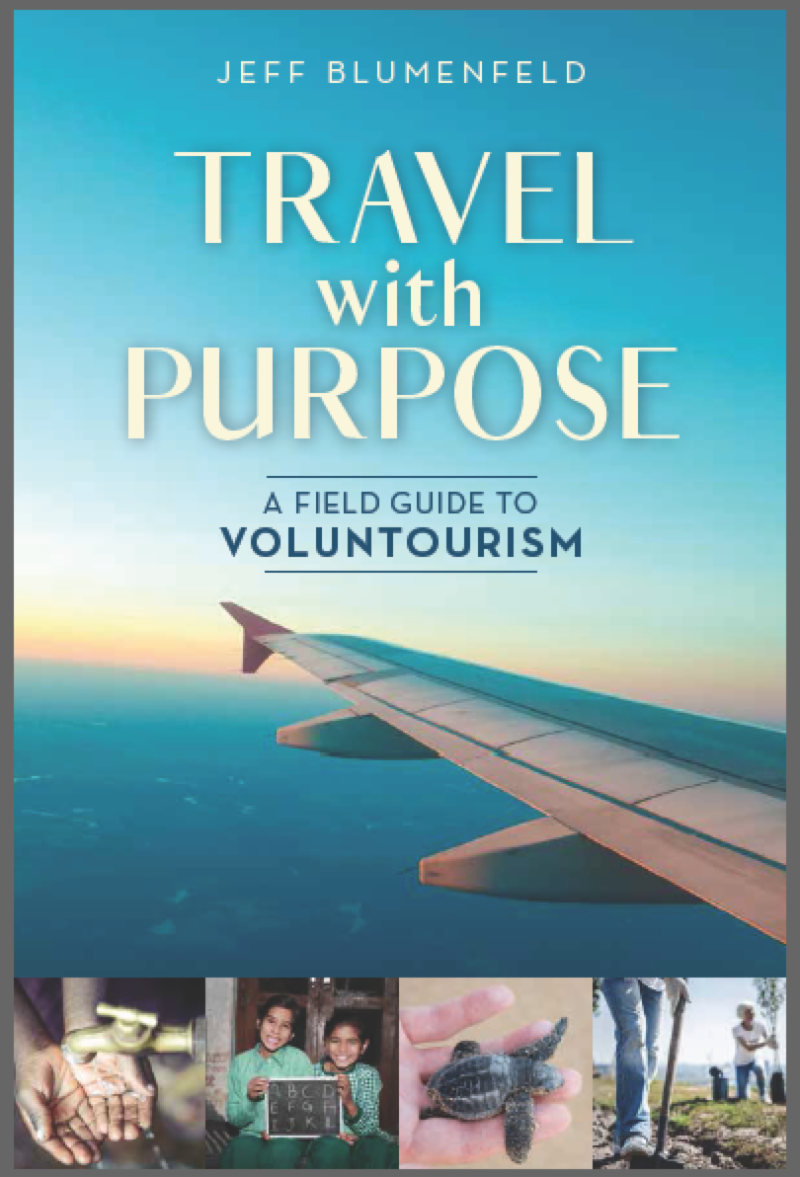
Travel With Purpose, A Field Guide to Voluntourism (Rowman & Littlefield, April 2019) by Jeff Blumenfeld - How to travel and make a difference while you see the world? These are stories of inspiration from everyday voluntourists, all of whom have advice about the best way to approach that first volunteer vacation, from Las Vegas to Nepal, lending a hand in nonprofits ranging from health care facilities, animal shelters and orphanages to impoverished schools. Case studies are ripped from the pages of Expedition News, including the volunteer work of Dooley Intermed, Himalayan Stove Project, and even a volunteer dinosaur dig in New Jersey.
Available now on Amazon, Barnes & Noble, and independent bookstores. Read excerpts and "Look Inside" at: tinyurl.com/voluntourismbook @purpose_book, www.travelwithpurposebook.com

Come to Official Launch Party, April 25, 2019, 6-8 p.m., Boulder Fjallraven store -celebrate the launch of Travel With Purpose at a free book launch party. Proceeds benefit the Himalayan Stove Project. For details, see www.travelwithpurposebook.com

Get Sponsored! - Hundreds of explorers and adventurers raise money each month to travel on world class expeditions to Mt. Everest, Nepal, Antarctica and elsewhere. Now the techniques they use to pay for their journeys are available to anyone who has a dream adventure project in mind, according to the book from Skyhorse Publishing called: Get Sponsored: A Funding Guide for Explorers, Adventurers and Would Be World Travelers.
Author Jeff Blumenfeld, an adventure marketing specialist who has represented 3M, Coleman, Du Pont, Lands' End and Orvis, among others, shares techniques for securing sponsors for expeditions and adventures.
Buy it here:
Advertise in Expedition News - For more information: blumassoc@aol.com.
EXPEDITION NEWS is published by Blumenfeld and Associates, LLC, 290 Laramie Blvd., Boulder, CO 80304 USA. Tel. 203 326 1200, editor@expeditionnews.com. Editor/publisher: Jeff Blumenfeld. Research editor: Lee Kovel. ©2018 Blumenfeld and Associates, Inc. All rights reserved. ISSN: 1526-8977. Subscriptions: US$36/yr. available by e-mail only. Credit card payments accepted through www.paypal.com. Read EXPEDITION NEWS at www.expeditionnews.com. Enjoy the EN blog at www.expeditionnews.blogspot.com


